Best Camera for Action Shots
- Get link
- X
- Other Apps

20 Best Camera for Action Shots in 2021
1. Olympus OM-D E-M1 Mark II Digital Camera
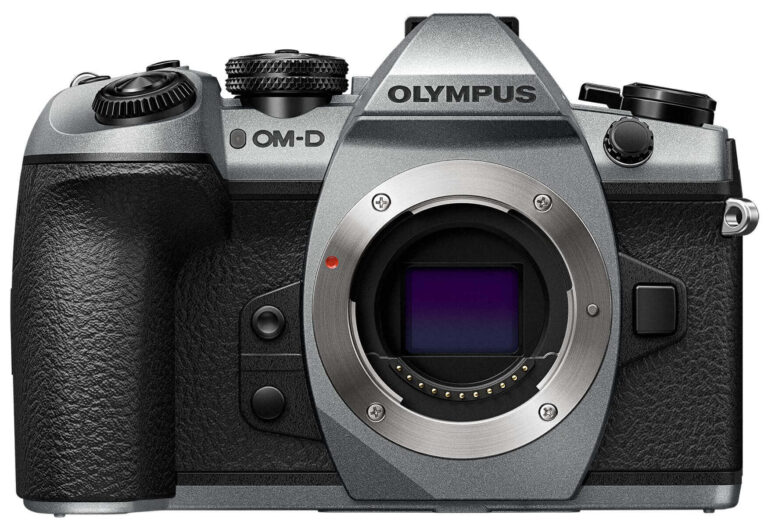
Pros of Olympus OM-D E-M1 Mark II:
- Vari-angle touch-screen display
- High frame rate
- Weather-sealed body
- Robust lens system
- In-body stabilization
- High-resolution capture mode
Cons of Olympus OM-D E-M1 Mark II:
- Omits built-in flash
- Very expensive
2. Nikon D5 DSLR Camera
With regards to sports photography, the D5 DSLR is for all intents and purposes unbeatable. As a matter of first importance, it offers class-driving autofocus and subject following execution, even at its maximum explosion of 12 fps.
Nikon D5 features an unlimited buffer and it can keep burst shooting for a long time. For this reason, it is considered the best camera for sports.
Of the multitude of cameras in this guide, just the 1D X Mark II can coordinate with the D5's madly strong form quality and climate fixing. The equivalent goes for ergonomics: just these two cameras offer underlying vertical grasps and optional shade discharges.
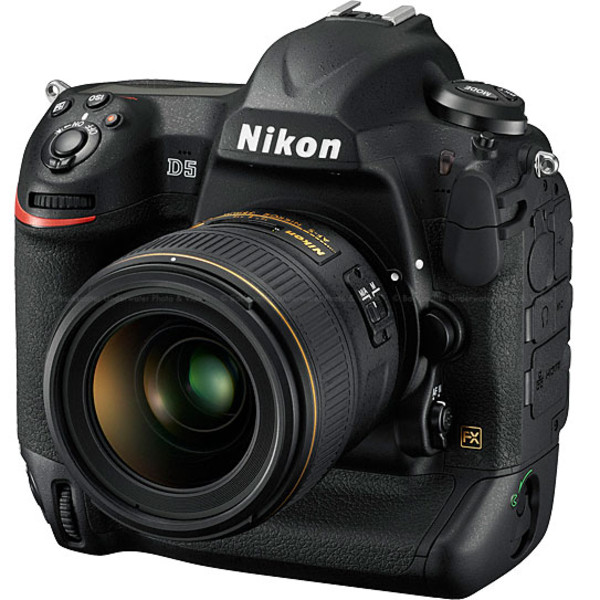
This additional hold offers the upside of accounting for a generously higher limit battery. This DSLR camera is perhaps the most adaptable camera we've found right now.
If you are among the best sports photographers who stick to JPEG for the greatest card space and additionally alter/move time, you're covered: JPEG tone and quality are very acceptable, and the equivalent is valid for Raw records.
However, their dynamic reach is slightly restricted contrasted with other full-outline Nikon DSLRs). At long last, the camera can even shoot respectable looking 4K video, yet with a crop factor.
Pros of Nikon D5:
- Ergonomic Design
- ISO range 100 to 102,400
- Clean HDMI output
- Marvelous shutter speed
- 153-Point Autofocus System
- 4K quality video
- Great JPEG image
Cons of Nikon D5:
- No Wi-Fi or Bluetooth
- Heavy and bulky
3. Canon EOS 1d X Mark III Camera
The Canon EOS-1D X Mark III is one of the amazing DSLR cameras intended for sports, untamed life, and other difficult types of action photography.
It has been designed nicely as the leader of the Canon EOS framework, the 1D X Mark III is portrayed by its refined handling capacities and unmistakable speed to suit both photo and video applications.
It comes with a 20.1MP full-frame CMOS sensor and an advanced DIGIC X picture processor. This camera of Canon is fit for nonstop shooting rates up to 16 fps with the optical viewfinder or 20 fps in live view, with a 1000-shot buffer at the time of shooting raw+JPEG.
The EOS iTR AF X autofocus systems utilize 191 focuses for rapidly and precisely procuring focus. It additionally empowers Face Tracking and Head Detection AF capacities, which utilize Deep Learning Technology, to keep up the basic spotlight on moving subjects.
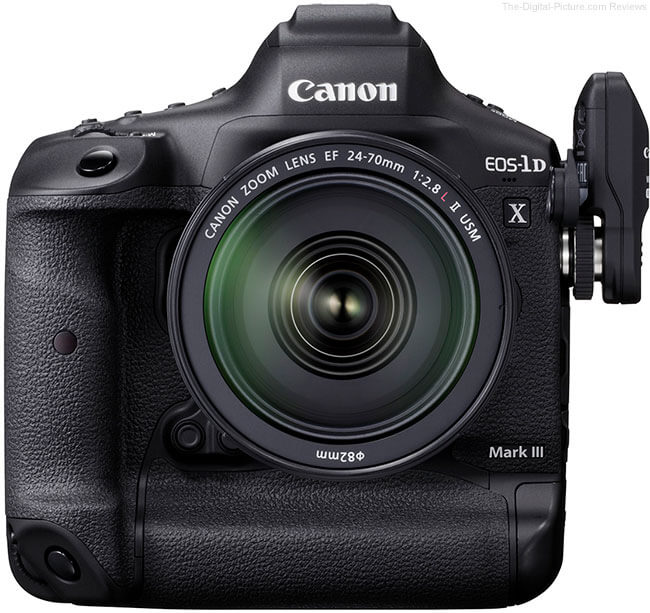
Moreover, when working in live view, Dual Pixel CMOS AF utilizes 3869 physically selectable focuses and gives a smooth, common focusing quality likened to the manner in which a camcorder procures focus.
Notwithstanding superior stills shooting, the 1D X Mark III is profoundly capable for video, with the capacity to record DCI 4K substance inside at up to 60 fps with 10-digit, 4:2:2 tone, just as Full HD at 120 fps and crude 5.5K (5472 x 2886) at 60 fps.
Pros of EOS 1d X Mark III:
- Great autofocus system
- Huge battery
- Optical (pentaprism) viewfinder
- 20fps with the electronic shutter
- Perfect for sports shooting
- Weather-Sealed Body
Cons of EOS 1d X Mark III:
- No Articulating Screen
4. Sony A7 III Mirrorless Camera
Sony A7 III is the best camera for sports. It is a beginner level full-frame camera that thrashes the opposition hands.
The camera comes with a 24-megapixels sensor, which is all that anyone could need for taking shots of enormous action photos to boost your sports photography ability. It is considered the best camera for sports.
10 frames per second are all that anyone could need to catch whatever you turn your eye to. Whether it is sports or photojournalism, wildlife this camera covers them all. The shutter is silent and can without much of a stretch track the subjects you focus around.
In this device, you will surely get 700 marks of autofocus. Those are just the phase recognition points. On the other hand, there are another 425 contrast-detection points.

In addition to the fact that it is quick, it is really precise, which means you get your shot and everybody is cheerful. 5-pivot picture adjustment permits you to work without a tripod.
You at this point don't have to stress over your shutter speed. It even functions admirably in low light, implying that this is the camera you need for any circumstance, whenever, anyplace.
Incredible battery life, double card spaces, and it has a considerably weather-sealed body! So this is really a great camera for sports photography.
Pros of Sony A7 III:
- 24MP full-frame sensor
- 4K HDR video
- 5-axis stabilization
- Silent shooting available
- Tilting touch LCD
- Excellent shutter speed
- Vastly improved battery
Cons of Sony A7 III:
- Dense menu system
- No in-body flash
5. Nikon D500 Camera
The D500 is the best camera for sports that offers incredible execution paying little mind to the shooting conditions and is fit for taking amazing photos.
JPEGs are extremely lively and bright without looking excessively preposterous or ridiculous. The picture sensor dominates at catching exceptionally itemized shots as long as the ISO setting stays inside the local reach.
Additionally, even high-ISO execution is still at a sufficient level. You can see slight picture smoothing when action photos are taken with ISO affectability in the 12800-51200 range. Standard printing sizes of A4 or more modest all look profoundly detailed.
This Nikon D500 camera for sports has a 153-point af system, with the majority of the focus being of the cross-type for improved precision.
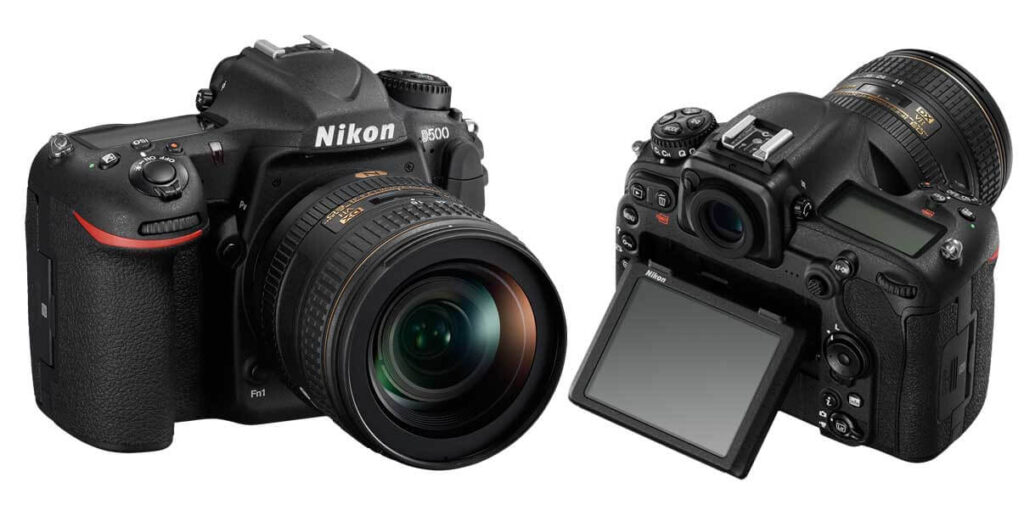
The AF is additionally quick as I've encountered bolting issues just when shooting in extremely dull conditions. The constant focus mode works effectively by following the subject when you have a functioning autofocus point.
This is really a fabulous camera for sports photographers or any individual who intends to take photographs of their youngsters or pets running outside.
Niko D500 has an impressive design that includes a 3.2" tilting LCD touchscreen, which manages the cost of an agreeable method for working from high and low points.
A refreshed form of SnapBridge is also included, which gives Wi-Fi availability NFC, just as Bluetooth Low Energy innovation for connecting your cell phone for remote picture sharing.
Pros of Nikon D500:
- Clean HDMI output
- Excellent control layout
- Tilting touch-screen LCD
- High ISO image quality
- XQD and SD card slots
- Solid build quality
Cons of Nikon D500:
- Omits built-in flash
6. Canon EOS 7D Mark II Camera
This is the best camera for sports that has a nonstop shooting mode with up to 10fps with absolute exposure and automatic focusing.
There's negligible clamour when shooting inside standard ISO range, yet you can build the affectability in bad lighting conditions when you don't need to view or print photographs at an enormous size.
In case you're taking pictures at JPEG at ISO 51,200, they'll have a considerable amount of commotion and can have magenta or green tones.
If you diminish affectability to 25,600, you'll improve results. There will in any case be a lot of commotion, however, the shadings will be more precise. Also if you set the ISO to its maximum standard setting of 16,000, the pictures will be extremely excellent with no critical defects.

So we suggest the Canon 7D Mark II as the best DSLR for sports photographers who realizes that it is so essential to catch each second. Photographs are taken with insignificant deferrals, so you never hazard missing a solitary second of the competition.
Pros of Canon EOS 7D Mark II:
- Huge JPG shooting buffer
- Great control layout
- Integrated GPS
- 1/8,000-second shutter
- 10fps burst shooting
- 1080p60 video
Cons of Canon EOS 7D Mark II:
- High price
- Lacks built-in Wi-Fi
7. Fujifilm X-T3 Mirrorless Camera
The FUJIFILM X-T3 highlights a recently evolved back-enlightened X-Trans CMOS 4 sensor, the fourth era to include in the X Series.
It has a 26.1MP resolution. The sensor utilizes a one of a kind shading filter array, equivalent to X-Trans CMOS sensors, to control moiré and bogus tone without the utilization of an optical low-pass channel.
Its back-enlightened construction improves picture quality while keeping a high S/N proportion. Moreover, ISO160, already accessible just as broadened ISO, is currently important for the typical ISO range, permitting you to accomplish extraordinarily perfect, commotion free pictures.
It accompanies the X-Processor 4, a developed adaptation of X Series' picture handling motor that flaunts progressed preparing abilities.
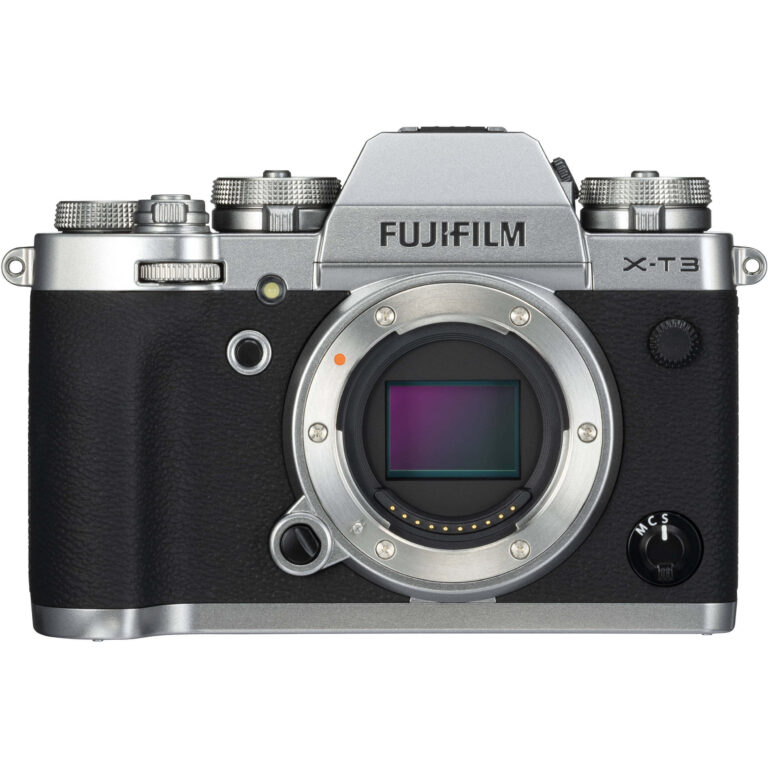
The new processor joined with another calculation, upgrades the Film Simulation modes, generously improving the camera's capacity to follow moving subjects, supports AF's speed and exactness, and takes into consideration a more different scope of video capacities.
It augments the maximum capacity of the X-Trans CMOS 4 sensor to convey the best on the whole perspectives throughout the entire existence of the X Series.
The presentation of face-detection AF on a moving individual has been multiplied. The eye-identification AF works in AF-C mode, keeping up the exact focus tracking with portrait pictures. It concentrates unequivocally when shooting individuals from the front or side.
Pros of Fujifilm X-T3:
- Enhanced AF processing
- Dust and splash protection
- Improved dials and buttons
- 20.0 fps continuous shooting
- 4K quality video
- Bluetooth and Wi-Fi
- Outstanding image quality
Cons of Fujifilm X-T3:
- No built-in flash
- Battery life could be better
8. Panasonic FZ330 Digital Camera
The Lumix DMC-FZ300 from Panasonic is a multi-layered simple to use improved for the interactive media picture creator. It is one of the best cameras right now for sports photography.
Highlighting a 12.1MP High-Sensitivity MOS sensor and Venus Engine picture processor, the FZ300 is equipped for recording up to 60 fps with an electronic screen, 12 fps with a mechanical shade, or 30 fps utilizing the interesting 4K Photo Modes.
Working in low-light is profited by a top affectability of ISO 6400 alongside 5-pivot HYBRID O.I.S.+ picture adjustment to limit camera shake during HD video recording.
The 24x Leica DC Vario-Elmarit focal point covers a 25-600mm comparable central length range and has a steady f/2.8 most extreme gap for reliable execution from wide-point to super fax.
You can easily deal with almost any action photographs. The FZ300 is a flexible camera appropriate for advanced action photography and film recording applications.

The body configuration includes an ergonomic right-hand grip for added uphold when working with longer focal lengths. Moreover, it has a dust and splash-proof body to suit working in severe conditions.
Profiting the two stills and films, Panasonic's DFD (Depth-From-Defocus) AF framework assists with stimulating focusing speeds while a Starlight AF include keeps up shining exactness in low-light conditions.
What's more, the camera is great for both sharing and shooting control. The Wi-Fi network considers remote picture sharing and remote camera control from cell phones and tablets.
Pros of Panasonic FZ330:
- Very fast autofocus
- Excellent EVF.
- 12.4fps burst shooting
- Stunning image quality
- All-weather build
- Vari-angle touch-screen display
- User-friendly camera
Cons of Panasonic FZ330:
- Quite expensive
- Small sensor
9. Sony A9 Mark II Mirrorless Camera
Another best camera for sports is the Sony A9ii which is a quick, savage full-frame sports camera. Its rankling burst speed and af system are coordinated by its remarkable network, which vows to be a distinct advantage for master shooters.
The camera utilizes a similar 24.2MP sensor and Bionz X processor as the first Sony A9, yielding a noteworthy 20fps persistent shooting with the electronic screen, 5-hub in-self-perception adjustment, 14-digit RAW yield, 4K quality video up to 30fps and 1080p up to 120fps, and a surprising self-adjust framework that makes up to 60 AF estimations each second.
For casual spectators, the expanded mechanical shooting explosion of 10 frames per second (up from 5 on the first) may seem like the most striking enhancement for the Sony A9 II.

The AF has been executed tuned to all the more dependably track quick, sporadically moving subjects – ideal for subjects making speed increase changes, like triple-jumpers, or fast altars of course like footballers shimmying to shake off safeguards.
Notwithstanding a bigger focus button and reshaped, retextured joystick, the shape and position of the back dial has been altered for simpler access and operability, and the openness pay dial presently has a lock. The hold has likewise been expanded for better buy, with more space for pinkies and expanded shade for centre fingers.
Pros of Sony A9 Mark II:
- Dust and splash protection
- 5-axis IBIS
- Wired and wireless file transfer
- Superlative autofocus system
- 24.2 MP full-frame sensor
- Superfast Wi-Fi
Cons of Sony A9 Mark II:
- Very pricey
10. Pentax KP Camera
The Pentax KP DSLR comes with an extraordinarily keen capacity interchangeable hold that can be traded depending on the situation by the photographer.
The camera was intended for exceptional low-light performance because of a recently evolved 24.3MP APS-C CMOS sensor that removes its anti-aliasing channel and the PRIME IV Engine with a gas pedal unit for preparing.
This empowers it to arrive at sensitivities up to ISO 819200 with insignificant commotion and catch the greatest sharpness consistently.
A 5-pivot in-body Shake Reduction II module further helps picture quality by making up for up to 5 stops of screen speed during longer exposures just as initiating the Pixel Shift Resolution mode.
Still imaging profits by the utilization of a SAFOX 11 27-point AF sensor, which will help picture takers lock onto their subjects rapidly and precisely. This makes certain to prove to be useful when taking shots at the maximum speed of 7 fps.
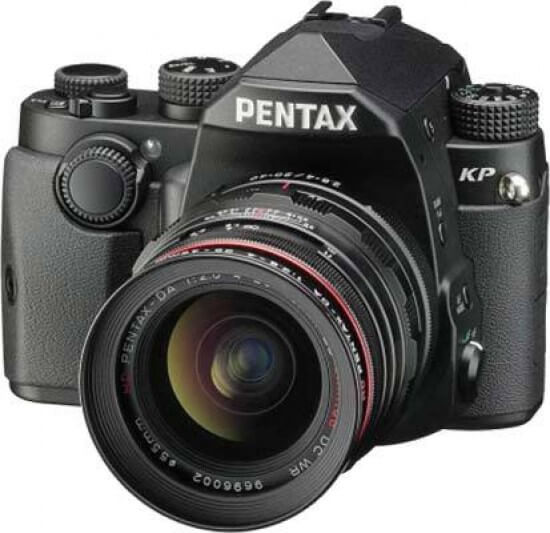
Additionally, the camera is outfitted with a mechanical screen of 1/6000 second and an electronic shade that can arrive at 1/24000 second. Alongside stills, the KP is equipped for recording Full HD 1080p video at up to 30 fps and it has a span shooting fit for making a 4K film.
The climate fixed magnesium amalgam body likewise sports worked in Wi-Fi alongside a shifting 3.0" 921k-speck LCD screen and a 0.95x optical viewfinder with 100% inclusion.
Pros of Pentax KP:
- 7fps continuous shooting
- Excellent high ISO performance
- Tilting LCD
- Modular grip system
- Weather-sealed design
- 5-axis image stabilization
- Eligible for sports shooting
Cons of Pentax KP:
- Short battery life
- Single card slot
- Get link
- X
- Other Apps
Comments
Post a Comment